Showing posts with label Education. Show all posts

Wednesday, March 22, 2017

Use something they love to help them learn!

     Hello everyone! I know it's been a while since I've posted anything but times have been busy. I'm still in the process of getting photo release forms together so that I can add pictures of the students to the blog, but hopefully they will be here soon. Today, I wanted to talk about something that has been said plenty often enough but I haven't seen done as often as I'd like. This is taking something that students already know or love and including it in your instructional strategy. This is a major part in the theory courses taught to secondary educators and I can certainly see why it is stressed so much.

     Working with my current demographic, I find motivation and interest to be vital to getting students to buy-in to the lesson or take an active part in it. This means finding ways to make the students interested in something as thrilling as data collection. Luckily, I like to think outside the box and color outside the lines and I came up with idea that I believe the students really enjoyed and one that earned me a "that a boy" from my fellow faculty members. This was simply flipping bottles!

     If you haven't noted this craze, chances are you aren't around students who have access to a bottle that they can flip because they will... constantly! Here is a video that currently has over 53 million views on Youtube of guys flipping bottles:


     This craze has swept the globe for reasons that I can't fully understand but I know a winning horse when I see one. So, I decided to have the students do something they loved doing anyway, flip bottles! Luckily, I could sneak in a little education under the radar. The trick was to have students generate a legitimate experiment all while having fun. We proposed the test or initial observation, generated a hypothesis, collected data, analyzed the data, looked for sources or error and improvement, and finally graphed and shared our results. It was a great way to introduce the scientific method and basic data collection.

     This link will take you to a copy of the activity if you'd like to see it or use it in your own classroom. This link will take you to the graph that I used in place of the one you just visited. I had hopes of taking this into an Excel lesson and having the students compile all of their data into a single graph, but time didn't allow. All in all, the students enjoyed the lesson and showed definite improvement on their assessments of this content. I will definitely be bring this or an activity very similar back into my classroom.

Friday, January 29, 2016

Hack the Planet: Eco-Makers offer open source solutions to save the world


     Makers went wild at an innovation camp held in France last October. There's a growing online presence of makers, or resourceful and ingenious people who just love to tinker and come up with interesting solutions and improvements to everyday experiences. What happens when you put 100 capable makers in a 16th century French chateau and tell them to save the world? You get POC21. 


     This article by Michael Floyd is going to be a great asset for inspiring kids to get interested in science. Many of the projects posted on POC21's website can be done in a classroom or lab setting and will give students the opportunity to work with science, creating solutions for problems they see around them. These online maker communities, magazines, and websites can be very valuable tools for science educators and I highly recommend following several if you're not already doing so!

Sunday, January 10, 2016

Supreme court to hear collective bargaining rights for educators case tomorrow

Reuters tells us that the supreme court will weigh in on collective bargaining rights for educators tomorrow. Read the article here.

Wednesday, January 6, 2016

How effective are your assessments?

     
      In a short article by Grant Wiggins, he asks us "How can the verb, itself, determine the rigor?" We recently stopped using Bloom's Taxonomy in favor of Webb's DOK chart and this brief article begs the same question that made the change to Webb's model. Is your assessment doing the best job possible? How can we improve assessment?
      One of my instructors discussed this conundrum with us just a couple of weeks before the last semester ended and it's kind of stuck with me. It's been easy in my brief experience to rely on buzzwords for assessment, using Bloom's or Webb's models to find an easy way to put something on paper. While this is a great way to complete a lesson plan for an assignment in an education course, I don't believe it will the best approach for my students. So, back to the drawing board, looking for the best method of assessment and assuring that the assessment is effective.
     In short, I think good old fashioned effort and a little ingenuity are the recipe I'm looking for. Nearly gone are the days of lesson planning for a grade, slapping something together that merely fits the rubric and looks good on paper. Now, I need to focus on the long term effects of my lessons and assessments. Does this lesson maximize retention and comprehension for a majority of my students and does the assessment highlight more than simple recall. Will my students be better thinkers after this? Did critical thinking, creativity, and growth happen? That's what the assessment needs to show, not how many of the buzzwords in the chart I included in my lesson plan, even if it does look great on paper.

Sunday, January 3, 2016

Is the Every Child Achieves Act a new direction or just a rebranding?


William J. Mathis gives his opinion of the new education bill, Every Child Achieves Act, which seeks to find new direction after the less than loved No Child Left Behind. Mathis critiques the efficacy and the amount of actual change in the legislation, what will it actually accomplish for our future students. One thing I did notice and was grateful to see was the understanding of how important the socioeconomic gap between students can be when related to student performance. I'll leave that rant for another post ;) What do you think of the new education bill and the article? Leave your comments below!

Here's a link about the bill from the Senate Committee on Health, Education, Labor, and Pensions.
Here's a link to the actual bill.

Wednesday, October 28, 2015

Cyber Charters Have 'Overwhelming Negative Impact,' CREDO Study Finds


A recent study by the Center for Research On Education Outcomes (CREDO) finds that online education underperforms traditional "brick and mortar" schools. Having experienced online education myself, I'm not at all surprised by these findings. Students need to connect to material, discuss it, and make it an active part of the experience. I had little luck connecting to material found in my online classes and honestly, my work was less inspired as well. The're cheap and easy to access, but online institutions lack a vital part of the puzzle, the human element. Teachers don't need to be the dispenser of knowledge anymore. Students have the collected knowledge of all humanity available in the palms of their hands. A teacher"s role has adapted to be the mediator between this knowledge and the current understanding of the students. Guiding students to the correct information in an orderly and well-paced structure is now the focus and with today's media and technology, the possibilities are exciting! Interactive presentations, web-based virtual labs, and a wide variety of social and sharing software combine to create an environment where limits are set by the teacher's imagination, not the textbook. Online education is exactly that, an interactive textbook. Sure, it has videos, tutorials, and a plethora of "help" options, but those options won't put you face to face with someone who is capable and wants to help you. Time will tell on web-based education and while I don't see the concept losing steam anytime soon, the numbers aren't looking good!


Friday, October 23, 2015

No Sitting on the Job!


It's been drilled into my head from the beginning of my education courses that teachers should rarely, if ever, sit down during class time. This accomplishes several goals for the teacher, including behavioral management, "withitness", and making the teacher available to all the students for on-on-one help. That being said, I'm not sure if I'd condone throwing out all of the teachers' desks!

That's exactly what Donna Connely, a Bronx K-5 principal, did according to a recent article circulating around Slate and the New York Post. Connely felt that her teachers were sitting too often during class, so the desks were removed, students watching as the teachers emptied their desks and pushed them into the hallway for removal. 

Connely decided to return the desks after a strong social media response and several articles in media outlets such as the New York Post and Slate, I guess that's one good thing about the immediate feedback of social media, make a mistake and people are all too excited to point it out!

When the education field is tumultuous and things are in a constant state of change, what good do actions like this do for students? What went through students' minds as humiliated teachers begrudgingly shoved desks into hallways? Better yet, what education was accomplished that day and how long will the ripple effect last? Feel free to leave your opinions in the comments section below.

Friday, October 16, 2015

How to Change Education


Where should schools draw the line?


I saw this video a while ago and it's recently become a hot topic on social media. Yesterday, sitting in a botany lab with my lab group, a discussion began where this video and its ideas were a main topic. Many of the students and even the teacher expressed concern about what isn't being taught in our public schools. There seems to be a consensus that young adults are leaving high school ill equipped for daily life, unprepared to face the daily challenges of being self-reliant and independent. 

While we discussed how students don't seem to understand personal finance, basic personal healthcare, job and interview skills, or even maintaining their homes and vehicles, a thought occurred to me that I felt was worth sharing: Where are the boundaries for the ideas and skills that public schools should teach? Where does public education draw the line?

I remember being taught how to balance a check book, dress professionally, operate a washing machine, and several other skills when I was young. The issue is that I was taught these skills by family and friends. I learned these social skills in my social environment. Now don't get me wrong, my school offered several courses in which the goal was to prepare students for "real life", but these were classes that students took to fill their schedule with a class that didn't cut into their Friday night. Maybe these classes are being culled from the curriculum do to low student interest or it could be because schools are struggling to cover the content and new instructional methods being passed down from state and national education departments.

This brings us to my main point. Who is responsible for teaching students basic life skills? I have no doubt that many educators would delight in providing students with skills that would help them become better individuals and citizens, but I don't know of many who can find any time in class to provide these lessons. Coming from a Biology background, there is no lack of content that I would love and actually feel I need to cover, but there just aren't enough hours in the day. Many educators already struggle finding a middle ground between what they feel they need to cover and not covering so much material that students are incapable of processing and retaining it.

So, should schools focus on trying to provide a well rounded education including life skills to all students or should they focus on just academic topics? The general idea in western education is to provide a well rounded education, one composed of several subjects and cognitive skills. Now, my ears perk up when I hear people discussing the state of education these days and I often hear people lamenting the fact that they have to learn two years of foreign language, the quadratic equation, and which acid is the final product of the Kreb's Cycle when they plan on becoming a media specialist. It makes sense from either perspective, well rounded or content focused education. I think the issue is that there isn't a consensus on what public education should include, at least a realistic one.

If schools focus on content and academics, that leaves the burden of basic life skills on the shoulders of parents and the community. If schools try to include basic life skills in every student's education, that means less content and other skills covered in class. Unfortunately, you apparently can't have your cake and eat it to. So, where do you stand in this debate or do you have a position? If you do, feel free to comment! 

Sunday, October 11, 2015

Did we miss a turn somewhere?


 I really like what this guy has to say. He has some great insights about education and educational culture. There's a big pressure nationally to "teach to the test" and honestly, I can understand why educational institutions find their educators doing this. If students don't do well on these standardized tests, the schools are defunded and teachers and faculty are subsequently "let go". An article posted by the NEA explains some of the opinions and numbers. 

It seems to me that this form of high stakes testing is rough on students. Instead of being able to explore science (I guess we should include the other subjects as well...), students are placed in a tunnel vision approach for the test with no errors allowable, no side trips! These investigations and allowing curiosity to be nurtured and encouraged doesn't seem to have a place in the modern educational arena. The focus is content coverage and preparation for evaluation, both on the part of the student and the teacher.

Sure, there needs to be a way to assess teacher and student performance, but is our current model working to the benefit of our students? Is this the best method we can devise to maximize learning and interest in academia? I'm rarely satisfied with good enough, usually focusing on ways to improve and not just be content with the status quo. I think it's about time we rethink our approach, find ways to maximize true learning and a fostering of academic curiosity. Doing this while finding a better assessment method won't be easy, but anything worth doing rarely is!

Wednesday, October 7, 2015

He's gonna ask a question....RUUUUUN!!!!


So, I had the joy of teaching my first lesson of the semester at a local high school. The lesson went really well and the students seemed to have a good time with the activity. With all the educational joy floating around and the excitement from the activity, I was surprised to notice something a little disconcerting. THE STUDENTS DID NOT WANT TO ANSWER QUESTIONS! Now, for those of you who already teach, this is probably not exactly a revelation to you, but many of us "green horns" haven't had enough time in the classroom to have experienced this. Students DO NOT like answering questions, specifically during the lecture. I noticed and addressed this in my lesson that day.

I decided to bring this up right in the middle of my lecture, mostly because the opportunity presented itself and I felt that it's advice that often isn't handed out to students. The truth is, at least in my experience as a student, most of us practically crawl under the desk hoping to avoid answering the teacher's questions during lecture! Why is this the case? Why are we so afraid to speak up when called upon, especially when some of us, myself included, have no problem speaking up in class about pretty much anything else? Well, to put it simply, no one wants to look stupid in front of a crowd!

So, I told the class "Hey guys and girls, if you knew all of this information already, I'd be out of a job! You're all here because you DON'T KNOW what we're talking about....YET!" One of the best ways to get past the "yet" is to ask questions, answer the teacher's questions, and in general, not be afraid of being wrong. We're all going to be wrong, so embrace ignorance! I can pretty much guarantee that several of the other students in the class are just praying that someone will ask the question that's been in their mind the whole class. So, don't be afraid to speak up, answer the lecture questions, or ask your own questions! We all just might learn something ;)

Friday, October 2, 2015

Great tools for curiosity: Discrepant Events

What is a Discrepant event?


Discrepant events, or a Conceptual Conflict, are situations or scenarios where what one observes does not match what one would expect to observe. It is a paradoxical event that clashes with what the observer knows to be true, essentially throwing a wrench in their cognitive gears. When this happens, the general reaction is a discomforting curiosity that leads the observer on a path to reach a kind of equilibrium or solace. In the case of its use in science education, the students (observers) were motivated to figure out the trick or understand why the event didn’t make sense. Students who were generally disengaged or unmotivated were also lured into the educational trap! Students just couldn’t stand not knowing how it all worked and this lead to a change in their mindset in the classroom. It lead to the mindset that so many teachers seek to instill in their students: wonder, curiosity, and a desire to overcome the challenge. Teachers who can present the right challenge to students in the right fashion can have profound effects on their students.

                I had a teacher like this once, an 8th grade Biology teacher with a crazy personality and an even crazier taste in pants. I heard about this teacher within a week of starting classes in the school. It seemed like everyone knew him, liked him, and wanted desperately to be in his class. After I heard his name buzzing around for long enough, I walked over to his classroom to see what all the fuss was about. Sure enough, the lair of a mad scientist with a soft spot for critters, specifically snakes. I saw rabbits, several snakes, various rodents, and all manner of beakers, burners, and cool scientific stuff. It looked like a classroom I wanted to be in, but it wasn’t the pets or even all the cool gadgets littered throughout the room. It was him, Mr. Granderson. He had a reputation for blowing stuff up and doing crazy demonstrations in his classroom, a reputation I was lucky enough to confirm when I took his class the next year. He didn’t just blow things up, set them on fire, and entertain us until our hearts were content, he challenged us. Many of his little demonstrations were discrepant events, leaving us perplexed and itching to learn. This drive is the result of the application of discrepant events in the classroom.

Wednesday, September 30, 2015

SciFi to Diversify!

There's a lot of material to cover in the average Biology class... A LOT. So much so that students can get burned out on taking in so much information, especially if that information is coming directly from the text book and the average worksheet. So, what can we as educators do to increase student engagement, get students to enjoy digging into a massive pile of content? One answer: using science fiction in popular books and films, such as The Martian, to introduce new material and create new unit environments for students to explore. Instead of introducing cellular process content in the manner that the textbook lays out, introduce films and other science media and tie the content to it. For instance, the teacher could create a hypothetical scenario where the students play the part of a scientist, trapped on Mars and trying to survive until a rescue ship can make the long trip to the red planet, much like Matt Damon's character in the film. To introduce those cellular processes, the teacher could pose a question to the student scientists: How do we grow food on Mars? This creates an original, applicable, and engaging learning environment that ties content to current events, making the content fun and relevant to the students. This question, "How do we grow food on Mars?", can introduce students to Photosynthesis, Cellular Respiration, Human Nutrition, and even branch into basic plant morphology. There are many ways to tie the content in your classroom to exciting things going on in students' lives. Instead of plowing through that textbook, bring the content out of the book and into the real world!

Thursday, September 17, 2015

A Battle of Attrition - Time to Suit Up

One of my biggest concerns as a future educator is finding effective ways to motivate students to take an interest in Science and education in general. A student that isn't excited to be in your class or motivated to succeed in their education isn't likely to perform at their best. Since this is our goal as teachers, to unlock the full potential of our students, interest and motivation has been a big part of my lesson planning process. I think that science is a FASCINATING subject, but unfortunately, not everyone feels the same (crazy right!?). So, today I want to talk about one of the easiest ways to motivate your students. I'm sure that, like myself, many educators begin starry-eyed and idealistic, hoping to change the world one student at a time. Unfortunately, for some educators, this zeal is lost for a variety of reasons. How many of you remember sitting in a classroom with an instructor who seemed to have given up on motivating students and bringing excitement to their class? Students pick up on this easily and it has detrimental effects on student morale and performance. We as educators MUST continue to bring energy and excitement about our subjects to our classrooms or risk losing our students' interest. Now, not every student can be persuaded by the instructor's energy alone, but it can be pivotal to many. Don't give into the weathering effects of daily life, instead strive to be the driving force behind student motivation. If the instructor isn't motivated and excited to be in the class, how can we expect students to reciprocate? Student interest is a major factor effecting performance and can be affected simply by the instructor's classroom presence and energy level. Don't fall prey to disinterest or apathy! I had an instructor tell me yesterday, "Teachers have to be great actors", and this applies directly to the teacher's classroom persona. Sure, we all have bad days, bad mornings, and slumps in motivation, but we can't afford to let that affect the way we deal with students on a day-to-day basis. The show must go on, so put on your professional "happy face" and get inspired to inspire. It's time to fight the good fight and do all that we can to stay motivated in the classroom!

Wednesday, September 16, 2015

Professional Educational Organizations


      So, today I'm giving a quick speech about professional organizations for educators. I made this presentation to highlight some of the perks to becoming a member in one or more of these organizations. Groups like the National Association of Biology Teachers offer a multitude of resources related to Biology and Life Science education and will be a great tool for me during my time teaching. They even have a bioclub! I really look forward to some of the great opportunities that these organizations can offer, such as networking with other Biology teachers, keeping up with the latest methods and news, and conferences and workshops to gain the best skills. If you're an educator reading this, are you a member of any professional organizations? If so, tell me which ones in the comments below! Powered by emaze

Tuesday, September 8, 2015

National Literacy Day!!!


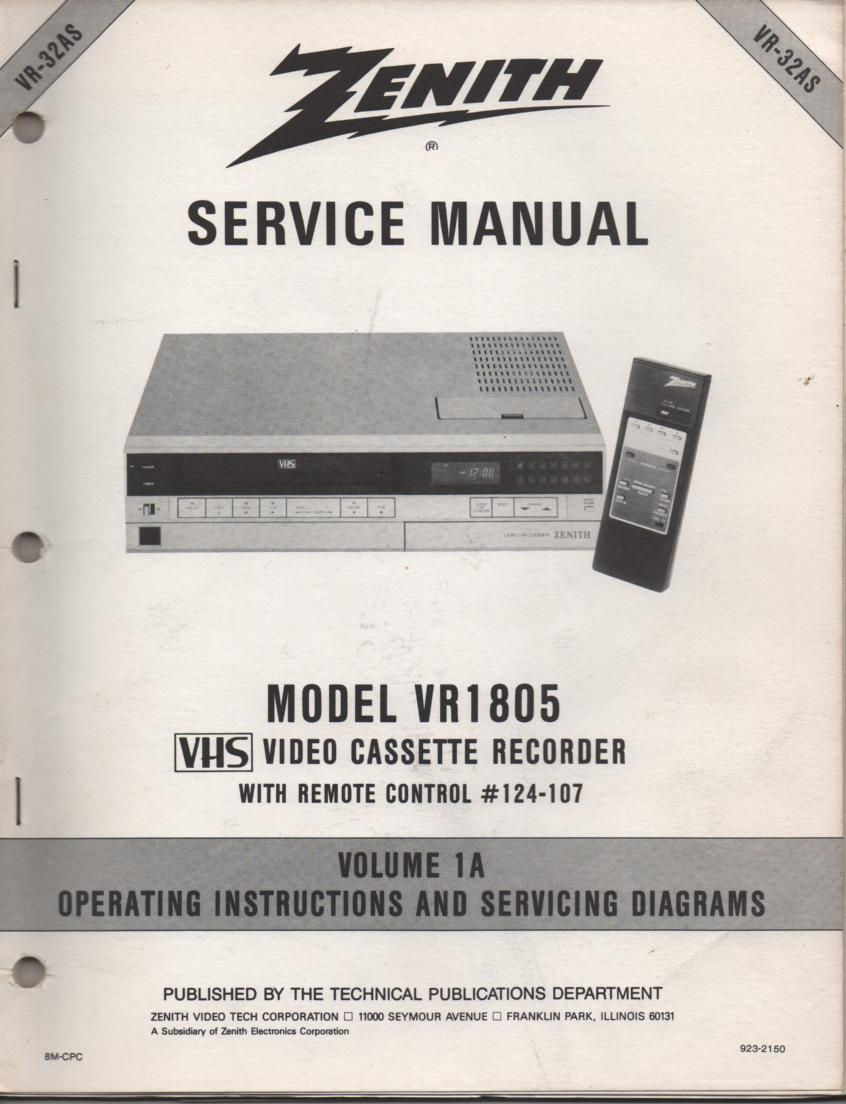
Today, we focus on literacy. But wait, this is a science blog!!! So, how does literacy effect science education? We all remember being assigned chapters of text to read in science class and many of us actually read them! The unfortunate reality for many is that the average science textbook can be about as interesting to read as a VCR manual. This is especially true if one's reading skills are sub-par or one hasn't been shown the most effective ways to read and comprehend an "expository text". While fictions read in English and Literature classes offer a plethora of interesting stories, those bits of information presented in science textbooks tell an amazing tale of the richness and dynamic nature of scientific reality, albeit in dry and humorless fashion. As teachers, we should strive to make the information relatable to students and give them the tools to comprehend and use the information presented. Have you, as a science teacher, thought about implementing reading strategies into your lessons or methods? Since teachers do not generally have enough time to cover all the material they would like while in the classroom, this leaves them little choice but to assign reading to be taken home and completed solely by the student. This method is only effective if the students are able to effectively read and comprehend the text. Without the skills to do this, that textbook looks more and more like the manual above, not exactly thrilling. Take time today to look for ways to help improve your students' reading abilities as they will ultimately improve the students' overall academic performance in science and other subjects as well. Happy reading!

Links:
Question Answer Relationship Method
Promoting Critical Thinking with Science News

Thursday, September 3, 2015

RSA Animate - Changing Education Paradigms


There are some really good points in this video. What can we do as individuals and organizations to make education more effective and applicable to peoples' lives? What is wrong with the current system and how can we fix it? I speak with people often about these questions and I get as many questions as I do answers. Watch the video and tell me what you think!